Calf pain is common and usually not a cause for alarm — cramps, strained muscles and irritated tendons are the familiar culprits. The exceptions are a deep vein clot, a blocked artery and pressure building inside an injured calf, and a clot cannot be ruled out at home, however mild the leg looks. Here is how to sort the patterns, and how soon each needs to be seen.
When to worry about calf pain
Call 911 if:
- calf pain or swelling comes with sudden breathlessness, any chest pain or discomfort, coughing blood, a racing heart or fainting — a clot may have reached the lungs
- the leg suddenly turns cold, pale, numb or weak, often with severe pain — its blood supply may be cut off
- the calf is tight and swollen with severe, worsening pain after an injury or under a cast, especially with numbness — possible acute compartment syndrome, which needs surgery right away
Be seen today — emergency department, urgent care or same-day primary care, wherever can arrange an ultrasound — if one calf has become painful, tender or swollen without an injury that clearly explains it, especially with warmth or a color change. Only testing can tell a clot from the harmless causes. Care thresholds →
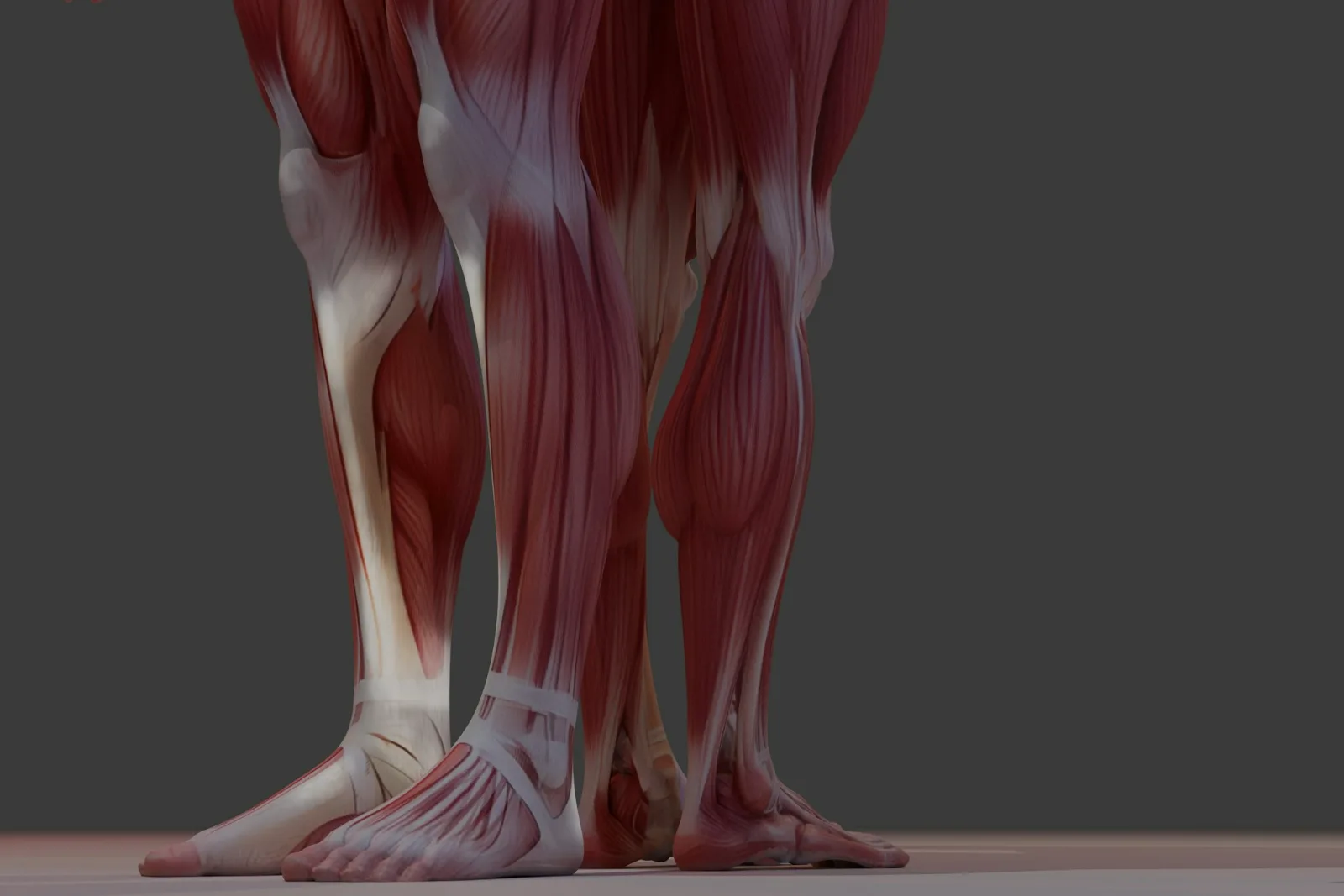
Calf pain, sorted by pattern
A map, not a diagnosis: patterns overlap, and two causes can coexist — a clot can sit alongside a torn muscle.
| Pattern | Possible cause | How soon |
|---|---|---|
| One calf newly painful, tender or swollen, often warm or discolored, no clear injury | Deep vein thrombosis (DVT); a burst Baker’s cyst or cellulitis can look identical | Today |
| A leg that suddenly turns cold, pale, numb or weak, often with severe pain | Blocked artery (acute limb ischemia) | 911 |
| Pain out of proportion to an injury, a tight swollen calf, numbness | Acute compartment syndrome | 911 |
| Sudden pain mid-movement, like being struck in the calf, sometimes with a pop | Torn calf muscle (“tennis leg”) | Self-care if you can walk and the calf is not swollen; same day if it swells, the pain is severe, or you can manage only a few steps |
| Pain just above the heel: gradual with morning stiffness, or a sudden “kick” and weak push-off | Achilles tendinopathy, or rupture if sudden | Routine; same day if sudden |
| Fullness behind the knee; sudden pain, swelling or bruising spreading into the calf if it bursts | Baker’s cyst | Today, with an ultrasound, if the calf suddenly swells or becomes more painful, warm, red or darker, or bruised — a clot must be excluded |
| A red, warm, tender, hardened line along a vein near the surface | Superficial thrombophlebitis | The same day or the next; today if the calf swells or the line extends up toward the groin |
| Hot, swollen, painful skin, usually red; feeling unwell | Cellulitis (skin infection) | Today |
| Aching or cramping on walking that stops with rest and returns when you set off again | Claudication from narrowed arteries (PAD) | Routine; the same day or the next if the foot hurts at rest |
| Tightness or burning at the same point in exercise, easing within 15 minutes of stopping | Chronic exertional compartment syndrome | Routine |
| A sudden hard, painful knot at night or at rest, lasting seconds to 10 minutes | Cramp | Routine if frequent, disturbing sleep or lasting over 10 minutes |
| Pain running from the buttock down the back of the leg, with tingling or numbness | Sciatica or another spinal cause | Routine; 911 for numbness around the genitals or anus, or new bladder or bowel problems |
| Heavy, tight, aching calves with ankle swelling or varicose veins | Chronic venous insufficiency | Routine |
Calf pain: blood clot or muscle?
This is the question behind most searches, and the leg cannot answer it. A deep vein thrombosis typically causes throbbing pain in one calf or thigh, with swelling, warmth, or red, blue or darker skin. But about half of people with a DVT have no symptoms, and the rest overlap with a strained muscle, a burst Baker’s cyst and cellulitis.
| Clue | Points toward | Why it does not settle it |
|---|---|---|
| A clear moment during exercise, sometimes with a pop | Torn muscle | In one ultrasound study of people clinically diagnosed with tennis leg, 1 in 10 had a clot and no visible muscle injury |
| Little or no swelling | Something minor | About half of clots cause no symptoms |
| No risk factors | Lower odds of a clot | Clots sometimes happen for no obvious reason |
Clots are more likely after surgery or a hospital stay, 3 or more days in bed, journeys over 4 hours, in pregnancy and the 6 weeks after birth, with estrogen-containing contraception or HRT, with cancer, and after a previous clot. Having one makes a same-day check more pressing; having none does not cancel it. More on DVT →
The honest answer
No checklist rules a clot out, at home or by examination alone. Testing does: a risk assessment, sometimes a D-dimer blood test, and an ultrasound of the leg veins — which can also show the real cause, such as a torn muscle or a collection of fluid. If a clot is found, treatment is blood-thinning medicine, usually for at least 3 months. If the calf is swollen, the reasoning on one swollen leg applies.
Calf pain when walking
Aching, cramping or heaviness in the calf that comes on with walking or stairs, stops when you rest and returns when you start again is the classic symptom of peripheral artery disease (PAD), called claudication. It is more likely if you smoke or used to, have diabetes, high blood pressure, high cholesterol or kidney disease, or are older. Only about 1 in 4 people with PAD have this textbook pattern; more than half have atypical symptoms, and about 1 in 5 report none. The key test, an ankle-brachial index, compares blood pressure at the ankle and arm; a resting result below 0.90 suggests PAD.
Two causes imitate it. Spinal stenosis brings burning, aching, numbness or cramping from the buttocks into the legs on standing or walking, eased by sitting or bending forward. Chronic exertional compartment syndrome — most common in people under 30, especially with repetitive impact exercise such as running — causes tightness or burning at a consistent point in exercise that settles within 15 minutes of stopping. Telling these apart →
Sudden calf pain
A torn calf muscle — tennis leg — usually strikes in middle age or later, and is common in running and racquet sports. It can feel as if something hit the back of the leg, sometimes with a pop, and pain may build over the next few steps, with tenderness in the inner calf. Most strains feel better within about 2 weeks; severe ones take months.
An Achilles tendon rupture feels like being kicked in the calf, often with a pop, after which pushing off or rising onto your toes is difficult. It is most common between 30 and 40, in sport. Get it seen the same day.
A burst Baker’s cyst — a fluid-filled swelling behind the knee, usually from arthritis or a knee injury — causes sudden pain, swelling and bruising at the back of the knee and calf. So can a clot, which is why a suddenly swollen calf needs an ultrasound even if you know about the cyst. Baker’s cyst: a burst cyst or a clot? →
Acute compartment syndrome follows a fracture, a crush injury, a badly bruised muscle or a cast or bandage that is too tight. The warning sign is pain far beyond what the injury justifies, not eased by painkillers or raising the leg, with tightness, numbness or tingling. It needs surgery right away; permanent nerve damage can occur in less than 12 to 24 hours.
Cramps and calf pain at night
A cramp is a sudden, painful tightening of a muscle — most often the calf, usually at night or at rest — lasting from seconds to 10 minutes, with soreness for up to 24 hours. Triggers include age, hard exercise, late pregnancy, dehydration, alcohol-related liver disease and some medicines, such as statins and diuretics; often there is no clear reason.
Stretching, massaging or standing on the leg may ease a cramp, and regular calf stretches may make them less frequent. Skip quinine: US drug information says it should not be used for leg cramps, because it has not been shown to work for them and can cause serious, sometimes life-threatening side effects, including bleeding problems. A Cochrane review found magnesium unlikely to help older adults with cramps.
See a doctor if cramps disturb your sleep, last over 10 minutes, or come with numbness or swelling. A calf that stays swollen or tender afterward is not behaving like a cramp: stop massaging it and get it checked. Leg pain at night →
Three more causes worth knowing
Superficial thrombophlebitis is inflammation and clot in a vein just under the skin: a red, warm, tender, hardened line, often along a varicose vein or where a drip was placed. It often settles within 1 to 2 weeks, but studies have found a deep vein clot alongside it in roughly 6% to 36% of cases, so an ultrasound is usually advised. More on superficial thrombophlebitis →
Cellulitis, a skin infection most common on the legs, makes skin painful, hot and swollen, usually red (harder to see on brown or black skin), often with feeling unwell. Early antibiotics can stop it worsening. With confusion, dizziness or fainting, a fast heartbeat or fast breathing, or feeling very hot or shivery, call 911.
Sciatica, most often from a slipped disc, sends sharp or burning pain from the buttock down the back of the leg, sometimes into the calf and foot, with tingling, numbness or weakness, often worse with coughing or sneezing. It usually improves over weeks to months. Numbness around the genitals or anus, new bladder or bowel trouble, or severe or worsening weakness or numbness in both legs is 911.
What to do in the meantime
- Settle the urgency first. An unexplained painful or swollen calf is a same-day problem; no home remedy changes that.
- Leave a possibly clotted calf alone. No massage, no hard stretching, and no compression stockings that nobody has assessed you for.
- For a simple strain, rest it, use an ice pack for up to 20 minutes every 2 to 3 hours, and avoid heat, alcohol and massage for the first couple of days.
- Note the details: when it started, what you were doing, and any recent surgery, travel, hormones or past clot. Mention breathlessness or chest discomfort first.
From the clinic
With calf pain, the detail I listen for is the trigger. Pain that arrives at the same walking distance and fades with rest points me toward the arteries. A calf that is swollen, warm and tender on one side gets a same-day ultrasound, whatever else is going on. A sudden pop during sport is usually a muscle or tendon injury. Night cramps are common and usually harmless, but a calf that stays painful through the day is a different story and worth an examination.
Common questions
How do I know if my calf pain is a blood clot?
You cannot tell at home, and a clinician cannot reliably tell by looking. One calf rather than both, swelling, warmth, a color change, no clear injury and risk factors such as recent surgery, travel or pregnancy all raise concern — but about half of clots cause no symptoms. An ultrasound settles it, so a new, unexplained painful or swollen calf should be seen today.
What does a blood clot in the calf feel like?
Often a throbbing or cramp-like ache in one calf, with tenderness, swelling, warmth, or red, blue or darker skin — easily mistaken for a pulled muscle. It can also cause no symptoms at all. Leg pain with breathlessness or chest pain is a 911 call.
Why does my calf hurt when I walk?
If it comes on with walking, stops with rest and returns when you start again, check the arteries first (claudication), with an ankle-brachial index. Spinal stenosis and, in younger runners, exertional compartment syndrome are the main alternatives. It is a routine appointment unless your foot hurts at rest or something has suddenly changed.
What causes pain in the back of the calf?
Often the muscle itself — a strain, usually felt in the inner calf, or a cramp. Fullness behind the knee suggests a Baker’s cyst, pain near the heel the Achilles tendon, and pain running down from the buttock sciatica. A deep vein clot also hurts in the calf, so a swollen, warm or discolored calf without a clear injury should be seen today.
Should I massage or stretch a painful calf?
During an ordinary cramp, stretching and massage may ease it. For a fresh strain, skip massage and heat for the first couple of days. If a clot is possible — a swollen, tender calf with no clear cause — leave it alone until it has been checked.
Where to go next
Sources
- Cleveland Clinic. Calf Muscle Pain.
- Centers for Disease Control and Prevention. About Venous Thromboembolism (Blood Clots).
- NHS. Deep vein thrombosis (DVT).
- National Heart, Lung, and Blood Institute. Venous Thromboembolism — Diagnosis.
- StatPearls, NCBI Bookshelf. Gastrocnemius Strain.
- NHS. Sprains and strains.
- Mayo Clinic. Achilles tendon rupture — symptoms and causes and Achilles tendinitis — symptoms and causes.
- NHS. Baker’s cyst.
- MedlinePlus, National Library of Medicine. Baker cyst.
- MedlinePlus, National Library of Medicine. Compartment syndrome.
- NHS. Compartment syndrome.
- Mayo Clinic. Chronic exertional compartment syndrome — symptoms and causes.
- Society for Vascular Surgery. Acute Limb Ischemia and Peripheral Artery Disease.
- National Heart, Lung, and Blood Institute. Peripheral artery disease: Symptoms, Causes and Risk Factors and Diagnosis.
- National Institute of Arthritis and Musculoskeletal and Skin Diseases. Spinal Stenosis.
- Society for Vascular Surgery. Chronic Venous Insufficiency.
- NHS. Leg cramps.
- MedlinePlus (U.S. National Library of Medicine). Quinine.
- Cochrane. Magnesium for skeletal muscle cramps.
- NHS. Phlebitis (superficial thrombophlebitis).
- StatPearls, NCBI Bookshelf. Superficial Vein Thrombosis.
- NHS. Cellulitis.
- NHS. Sciatica.
Written by Tom Biernacki, DPM, FACFAS. Published 9 October 2026. Updated 16 October 2026. General education, not medical advice.