An electrical circulation booster makes your calf and foot muscles contract, and that really does move blood while it runs. Whether it changes a circulation problem is a separate question with a device-by-device answer — and for copper socks and magnetic insoles, the evidence we could find says no.
Before you buy anything for your legs
Call 911 if a leg or foot suddenly turns cold, pale, numb or severely painful; for sudden breathlessness, chest pain that is worse on breathing in, or coughing up blood; or for a wound with spreading redness and fever.
Be seen today if one leg has newly swollen or become painful, and do not put a booster, massager or compression on it while you wait. Be seen the same day or the next for foot pain at rest, a dark patch on a toe, or a foot or leg wound that is not healing.
How this guide was made, and how the site is paid. This is a research-based comparison built from manufacturer specifications and manuals, FDA records, UK advertising rulings and published guidance, checked in October 2026; we have not tested these products hands-on. Some links go to Amazon. As an Amazon Associate I earn from qualifying purchases. Commissions do not change which products are listed or what we say about them, and no manufacturer provided products, samples or payment for this guide. Our methodology · Disclosure
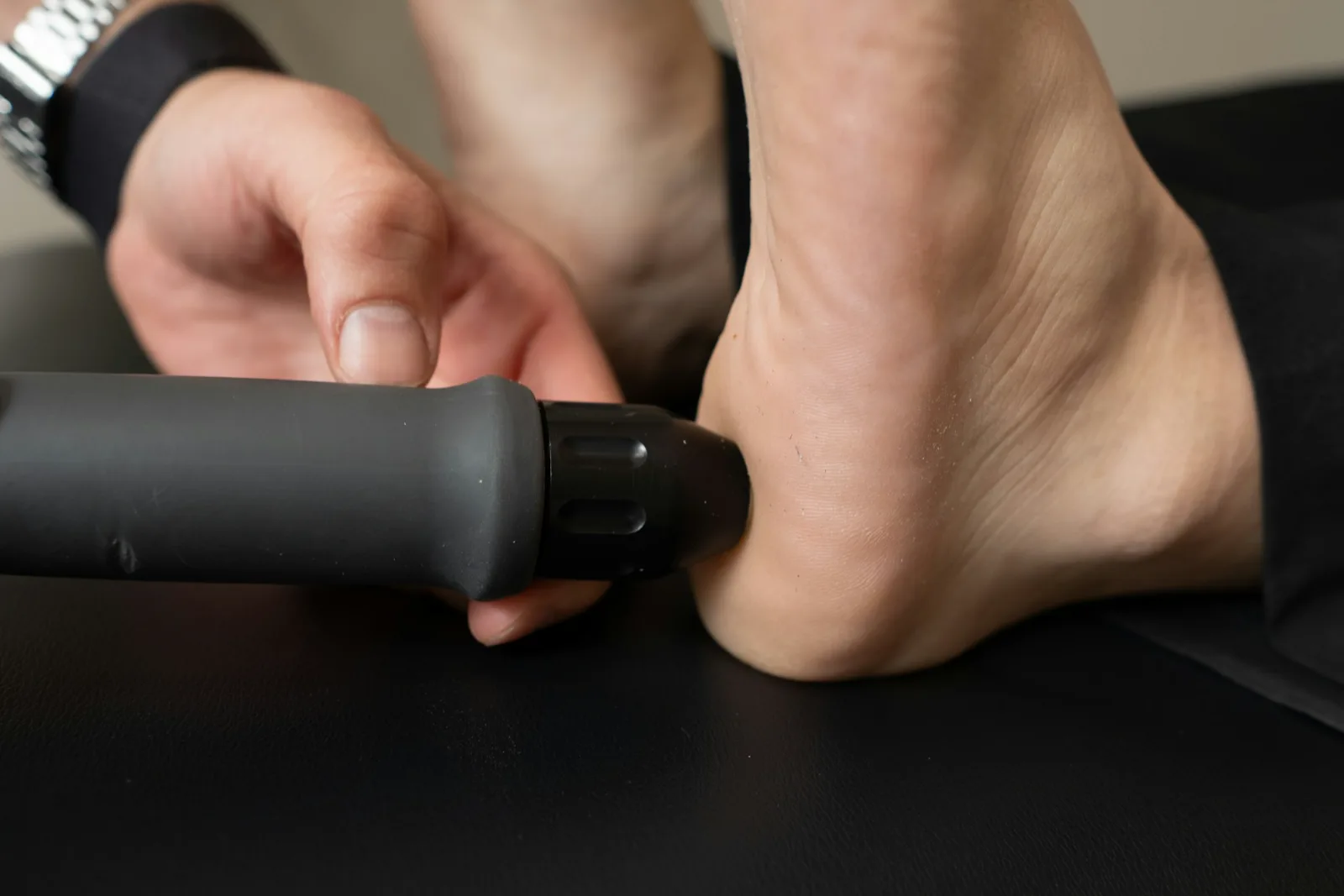
What a circulation booster can and cannot do
Devices sold as circulation boosters, leg circulation machines or foot circulation machines use electrical muscle stimulation (EMS) through foot pads, air sleeves that squeeze the legs, or a vibrating platform. Copper and magnetic socks and insoles promise the same without moving anything.
The active devices rest on a real mechanism: the UK advertising regulator, the ASA, accepts that muscle contraction can affect circulation near those muscles — while noting that whether it matters depends on the contractions’ strength, location and duration.
What no product does is open a narrowed artery. Peripheral artery disease (PAD) is treated with walking programs, medicines and, when needed, procedures that open or bypass the artery; Revitive’s own manual says its device is not intended to manage or reverse any underlying condition. Arteries and veins fail differently; here is how to tell them apart.
Who should get advice before using one
The makers’ own manuals and FDA filings are more cautious than their ads. Ask a clinician first, or skip the device, in any of these situations:
- A possible clot. Revitive and Normatec both list deep vein thrombosis (DVT) as a reason not to use them; a newly swollen or painful leg needs an ultrasound, not a gadget.
- A pacemaker or other implanted electronic device. Revitive warns of shock, burns, interference or death; NCCIH says some magnets can interfere with pacemakers and insulin pumps.
- Pregnancy. Revitive must not be used; Mayo Clinic and NCCIH advise asking first about vibration and magnets.
- Leg pain on walking, foot pain at rest, a slow-healing wound, or numb feet. Revitive asks you to see a doctor first and keeps its pads off open wounds and inflamed, pale or shiny skin. Numb feet can burn unnoticed: leave heat settings off.
- Heart disease, epilepsy or acute heart failure. Revitive asks you to consult first; Normatec’s filings rule out its use with acute heart failure or “in the presence of poor circulation.”
Anything that squeezes the leg, socks and air sleeves included, needs the arteries checked first — usually with an ankle-brachial index — if you have diabetes, leg pain on walking, numbness, a wound, kidney disease or heart failure. Compression safety explains why.
The evidence, device by device
Each label applies only to the outcome and group beside it.
| Device and claim | What the evidence supports | Label (outcome, group) |
|---|---|---|
| EMS foot pads (Revitive): “Boosts circulation” | Blood flow rises during use; in a vein-disease study the ASA reviewed, the rise was not maintained afterward. FDA’s over-the-counter wording: “temporarily increase local blood circulation in healthy leg muscles.” | Limited or conflicting evidence — lasting rise in blood flow, people with poor circulation. |
| EMS foot pads (Revitive): “Relieves aching legs” | In a participant-blinded, sham-controlled trial in generally healthy older people, 68% had a meaningful drop in leg pain after eight weeks of twice-daily use, against 36% on the sham. The ASA accepted the claim in 2025. | Useful in selected circumstances — leg aches, generally healthy older adults. One trial. |
| EMS foot pads (Revitive): “Reduces swelling” | Less swelling straight after 10–20 minutes of use in healthy volunteers; no fall in resting leg volume in people with vein disease. | Limited or conflicting evidence — swelling, people with vein disease or chronic swelling. |
| EMS foot pads (any brand): “Helps you walk further”; “treats poor circulation” | Added to structured exercise in PAD, it did not improve maximum walking distance, the main measure, though a secondary measure favored it; no sham or blinding. Nothing we found shows a home device reverses artery or vein disease. | Limited or conflicting evidence — walking distance, people with PAD. Unsupported claim — treating circulation disease, any group. |
| Clinical devices: the geko nerve stimulator, prescribed pneumatic compression: Prevent clots | NICE supports geko for people at high clot risk who cannot use other prevention, noting limited evidence, and recommends pneumatic compression for specific hospital patients, such as immobile people after acute stroke. See leg compression machines. | Established clinical use — pneumatic compression, clot prevention, those patients. Limited or conflicting evidence — geko, clot prevention, people who cannot use other methods. |
| Air-compression leg massagers: “Improves circulation, reduces swelling” | Cleared as massagers for temporary relief of minor aches and a temporary increase in circulation. The Normatec 3’s filings rule out use with poor circulation, DVT or acute heart failure; an earlier model’s filing reports no clinical testing. | Unsupported claim — treating poor circulation or swelling from disease. |
| Vibration plates: “Boosts circulation” | Single sessions raised blood flow in the limbs, but not muscle oxygen, in healthy young adults; ill people were not studied. Mayo Clinic says comprehensive research is lacking. | Limited or conflicting evidence — short-term blood flow, healthy young adults. Unsupported claim — treating poor circulation, any group. |
| Copper socks and insoles: “Copper improves circulation and eases pain” | We found no evidence that copper in fabric changes blood flow; copper bracelets showed no meaningful effect in a blinded arthritis trial. Any benefit from a copper sock comes from its squeeze, and compression stockings are a standard treatment for chronic venous insufficiency. | Unsupported claim — copper, for circulation or pain, any group. Established clinical use — compression itself, vein-disease swelling, adequate arteries. |
| Magnetic insoles: “Magnets improve circulation and ease foot pain” | Two randomized trials found them no better than sham insoles without magnets, for foot or heel pain. NCCIH finds no conclusive evidence that static magnets help any pain. | Unsupported claim — circulation or foot pain, any group. |
What regulators actually said
In the US, Revitive models are FDA cleared, not approved: the 510(k) route means showing substantial equivalence to a device already legally sold. The 2015 over-the-counter clearance covered temporarily increasing local circulation in healthy leg muscles and relieving sore muscles, and its summary lists safety and usability testing, not outcome trials. Clearances in 2020 and 2021 added a use for people with impaired leg blood flow: alongside existing treatment, “to temporarily reduce lower extremity pain, swelling and cramping.”
In the UK, where Revitive is a registered class IIa medical device, the ASA says that status is not evidence for medical claims. It ruled against Revitive ads in 2018, 2021 and 2025 — over aches, swelling, circulation, cramps, numbness, varicose veins and longer walks — and in 2025 accepted one narrower claim: relief of leg aches in generally healthy older people after eight weeks.
In 2015 Tommie Copper agreed to pay $1.35 million to settle FTC charges that it claimed, falsely or without substantiation, that its copper-infused garments relieve severe and chronic pain and inflammation. In 1999 an FTC order barred a seller of magnetic products, insoles among them, from unsubstantiated circulation claims.
What matters if you choose one
| Feature | What to look for | Why it matters |
|---|---|---|
| Regulatory status | An FDA 510(k) number and the uses it covers | Cleared uses are narrower than most ads, and one brand’s trials do not cover another. |
| Adjustment | Fine steps that start very low | Revitive’s manual says to begin at the lowest intensity and build up. |
| Fit | Sizing by height (sleeves) or leg measurements (socks) | Measure rather than guess. |
| Ease of use and cleaning | A remote, seated use, an automatic timer; the cost of replacement electrode pads | Bending is hard for many people. Pads are single-person use, and expired pads can irritate or burn skin. |
| Durability and returns | Warranty length (Revitive states two years); a return window of eight weeks or more | We have not tested durability. The one accepted EMS claim was measured at eight weeks. |
If you want one anyway: options by need
If your arteries are fine and you want comfort, or your calves working through long hours of sitting, these are reasonable examples — not treatments. Specifications come from each maker’s page or manual, checked in October 2026; check the current price.
Sitting a lot, and want your calves working: Revitive Medic (model 5573AQ)
EMS foot pads (intensity 1–99), an IsoRocker that rocks the ankles, a remote, a rechargeable battery and TENS electrode pads; the manual suggests 30–60 minutes a day. It may suit someone with healthy arteries who sits for long stretches, and the accepted trial used its program. Limits: the advice list above, and the maker’s warnings that it may dull pain that would warn you of a problem and that long-term effects are unknown. Revitive sells it through its own website; we did not find it on Amazon US when we checked in October 2026.
Revitive ProHealth is the simpler plug-in version (EMS only, 99 levels, a 15-degree IsoRocker); we could not confirm it runs the trial program, and it was not on Amazon US either.
Massage after activity: Hyperice Normatec 3 Legs
Air sleeves with five zones and seven pressure levels (40–110 mmHg), battery and app control, in Short, Standard or Tall. FDA-cleared over the counter to temporarily relieve minor muscle aches and increase circulation where applied. It may suit active people with healthy circulation. Limits: it is not medical compression, and its filings rule out use with poor circulation, DVT, acute heart failure, infection or wounds — cautions that apply to cheaper sleeves too. See it on Amazon · Browse options on Amazon
Vibration as exercise: Power Plate MOVE
Six settings from 30 to 40 Hz, a 300-pound load limit and a timer up to nine minutes. Its manual says it is not intended to treat medical conditions and asks anyone with a known condition to see a physician first. Mayo Clinic cites research that vibration done correctly, and supervised when needed, can improve strength and balance in older adults, though it is unclear whether it is as good as regular exercise. Limits: no evidence it treats poor circulation. See it on Amazon
Instead of copper socks: JOBST Relief knee-high, 15–20 mmHg, closed toe
A graduated compression stocking that states its pressure. It also comes in 20–30 and 30–40 mmHg and in styles up to waist-high, from small to extra-large with full-calf sizes. If you wanted the squeeze from a copper sock, this is the squeeze with a number on it. Limits: the arterial check above comes first — see choosing compression socks. See it on Amazon
We list no magnetic or copper insoles: in the foot-pain trial, plain cushioned insoles did just as well. With diabetes or numb feet, ask a podiatrist first.
Downsides and limits
- The effect stops when the device does, and any benefit takes weeks: the supportive trial used twice-daily sessions for eight weeks.
- It can hide a warning sign. If pain worsens or lasts more than five days, Revitive says to stop and see a doctor.
- Skin reactions. Irritation and burns under electrodes have been reported with powered muscle stimulators.
Circulation supplements: not reviewed
We have not reviewed “circulation” supplements and recommend none, because of interactions. The FDA warns that warfarin, ginkgo, aspirin and vitamin E can each thin the blood, and that together they may raise the risk of internal bleeding or stroke. Mayo Clinic says L-arginine may push blood pressure too low alongside blood pressure medicines and add to bleeding risk with blood thinners. PAD treatment commonly includes aspirin or clopidogrel, so this is not theoretical. Show any label to your pharmacist or doctor first.
What actually helps instead — including buying nothing
- Find out which circulation is the problem. Measuring the arteries decides which of these applies.
- Leg pain on walking: a structured walking program — NHLBI describes sessions at least three times a week for three to nine months — plus stopping smoking and prescribed medicines; see how structured walking works.
- Aching, swollen legs from veins: raising the legs, regular exercise and compression stockings, once the arteries are checked — but not elevation in severe PAD, where it can worsen foot pain; see leg elevation, done properly.
- Long hours sitting: get up and move around every hour or so, as the NHS advises; a pedal exerciser keeps your own muscles working at a desk. Browse options on Amazon
- The full picture: how to improve circulation in legs and feet.
Questions to ask your clinician
- Is there a medical cause for my symptoms that this device would not address?
- Is electrical stimulation safe with my heart, any implanted device, pregnancy or blood thinners?
- Would a structured walking program, compression or another treatment help me more?
- What should I expect from it, and when would you want to review how it is going?
From the clinic
Patients often ask whether a circulation booster will fix cold or aching legs. The better-known devices make the calf muscles contract, which can help move venous blood, but none of them opens a narrowed artery or treats the cause of swelling, and they are no substitute for walking. If you want to try one, ask your clinician first if you have a pacemaker, a possible clot or known artery disease, and judge it by how your legs feel rather than by the marketing.
Common questions
Do circulation boosters actually work?
An electrical circulation booster reliably makes your leg muscles contract, and blood flow rises while it runs, but in one study the rise did not outlast use. A trial found the Revitive Medic eased leg aches in generally healthy older people. None has been shown to treat artery or vein disease.
Is Revitive FDA approved?
Cleared, not approved. Revitive went through the FDA’s 510(k) route, showing substantial equivalence to devices already sold. Cleared uses include temporarily increasing local circulation in healthy leg muscles and, for newer models, temporary add-on relief of leg pain, swelling and cramping in people with poor blood flow.
Do copper compression socks work?
Not because of the copper: we found no evidence it changes blood flow. Any help comes from the squeeze, which a sock labeled in mmHg delivers more predictably — after an arterial check if you have diabetes, numbness, leg pain on walking, a wound, kidney disease or heart failure.
Do magnetic insoles work?
Two randomized trials found them no better than sham insoles without magnets for foot pain, and we found no good evidence that they improve circulation. Magnets can also interfere with pacemakers and insulin pumps.
Is a leg massager good for circulation?
Air-compression leg massagers are cleared for comfort: temporary relief of minor aches and a temporary rise in circulation where applied. They do not treat poor circulation, and one leading brand’s FDA filings rule out use with poor circulation, DVT or acute heart failure.
Where to go next
Sources
- U.S. Food and Drug Administration. 510(k) K143207: Revitive IX (OTC) — clearance letter, indications for use and summary.
- U.S. Food and Drug Administration. 510(k) K192887: Revitive Medic Plus and Revitive Advanced 2.
- U.S. Food and Drug Administration. 510(k) K210825: Revitive Medic Coach.
- U.S. Food and Drug Administration. Is It Really ‘FDA Approved’?
- Advertising Standards Authority. ASA Ruling on Actegy Ltd (11 April 2018).
- Advertising Standards Authority. ASA Ruling on Actegy Ltd (1 December 2021).
- Advertising Standards Authority. ASA Ruling on Actegy Ltd (6 August 2025).
- Actegy (Revitive). Revitive Medic User’s Manual, model 5573AQ.
- National Institute for Health and Care Excellence. The geko device for reducing the risk of venous thromboembolism (HTG344, formerly MTG19).
- National Institute for Health and Care Excellence. Venous thromboembolism in over 16s: reducing the risk of hospital-acquired deep vein thrombosis or pulmonary embolism (NG89).
- Electronic Code of Federal Regulations. 21 CFR 890.5650: Powered inflatable tube massager.
- U.S. Food and Drug Administration. 510(k) K220217: Normatec 3.
- U.S. Food and Drug Administration. 510(k) K183169: NormaTec Pulse 2.0 and Pulse Pro 2.0.
- U.S. Food and Drug Administration. 510(k) K160608: NormaTec Pulse and Pulse Pro — summary with contraindications.
- Games KE, Sefton JM, Wilson AE. Whole-Body Vibration and Blood Flow and Muscle Oxygenation: A Meta-Analysis. Journal of Athletic Training, 2015.
- Mayo Clinic. Whole-body vibration: An effective workout?
- Power Plate. MOVE Instructions for Use.
- Federal Trade Commission. Tommie Copper to Pay $1.35 Million to Settle FTC Deceptive Advertising Charges.
- Richmond SJ, Gunadasa S, Bland M, MacPherson H. Copper Bracelets and Magnetic Wrist Straps for Rheumatoid Arthritis – Analgesic and Anti-Inflammatory Effects. PLOS ONE, 2013.
- Federal Trade Commission. Magnetic Therapeutic Technologies, Inc.: Decision and Order (1999).
- American Family Physician. Magnetic Insoles Ineffective for Nonspecific Foot Pain.
- National Center for Complementary and Integrative Health. Magnets for Pain: What You Need To Know.
- U.S. Food and Drug Administration. Mixing Medications and Dietary Supplements Can Endanger Your Health.
- Mayo Clinic. L-arginine.
- National Heart, Lung, and Blood Institute. Peripheral Artery Disease — Treatment.
- Society for Vascular Surgery. Chronic Venous Insufficiency.
- MedlinePlus. Peripheral artery disease — legs.
- NHS. DVT (deep vein thrombosis).
- National Institute of Diabetes and Digestive and Kidney Diseases. Diabetes and Foot Problems.
Written by Tom Biernacki, DPM, FACFAS. Published 9 October 2026. Updated 16 October 2026. Research-based comparison; product details and retailer links checked 9 October 2026. General education, not medical advice.