Compression socks for flying are worth wearing if your risk of a blood clot is raised and the flight is long, roughly four hours or more. For a healthy traveler they are optional: they may ease ankle swelling, but the guidelines the CDC summarizes do not recommend them for clot prevention in people without risk factors. If you have diabetes, numb feet, leg pain when you walk, a foot or leg wound, kidney disease or heart failure, have your arteries checked before wearing them.
After a long flight, these need attention
Call 911 for sudden shortness of breath, chest pain that is worse on breathing in, coughing blood, a racing heart or fainting; a clot may have reached the lungs.
Be seen today if one leg becomes swollen, painful, warm or red, particularly in the calf. Most travel-related clots appear within one to two weeks of the flight, and the extra risk lasts up to about eight weeks, so a trip that ended days ago does not rule one out. More on DVT.
How this guide was made, and how the site is paid. This is a research-based comparison built from manufacturer specifications, checked on each maker’s own website in October 2026, and published guidance; we have not tested these products hands-on. Some links go to Amazon. As an Amazon Associate I earn from qualifying purchases. Commissions do not change which products are listed or what we say about them, and no manufacturer provided products, samples or payment for this guide. Our methodology · Disclosure
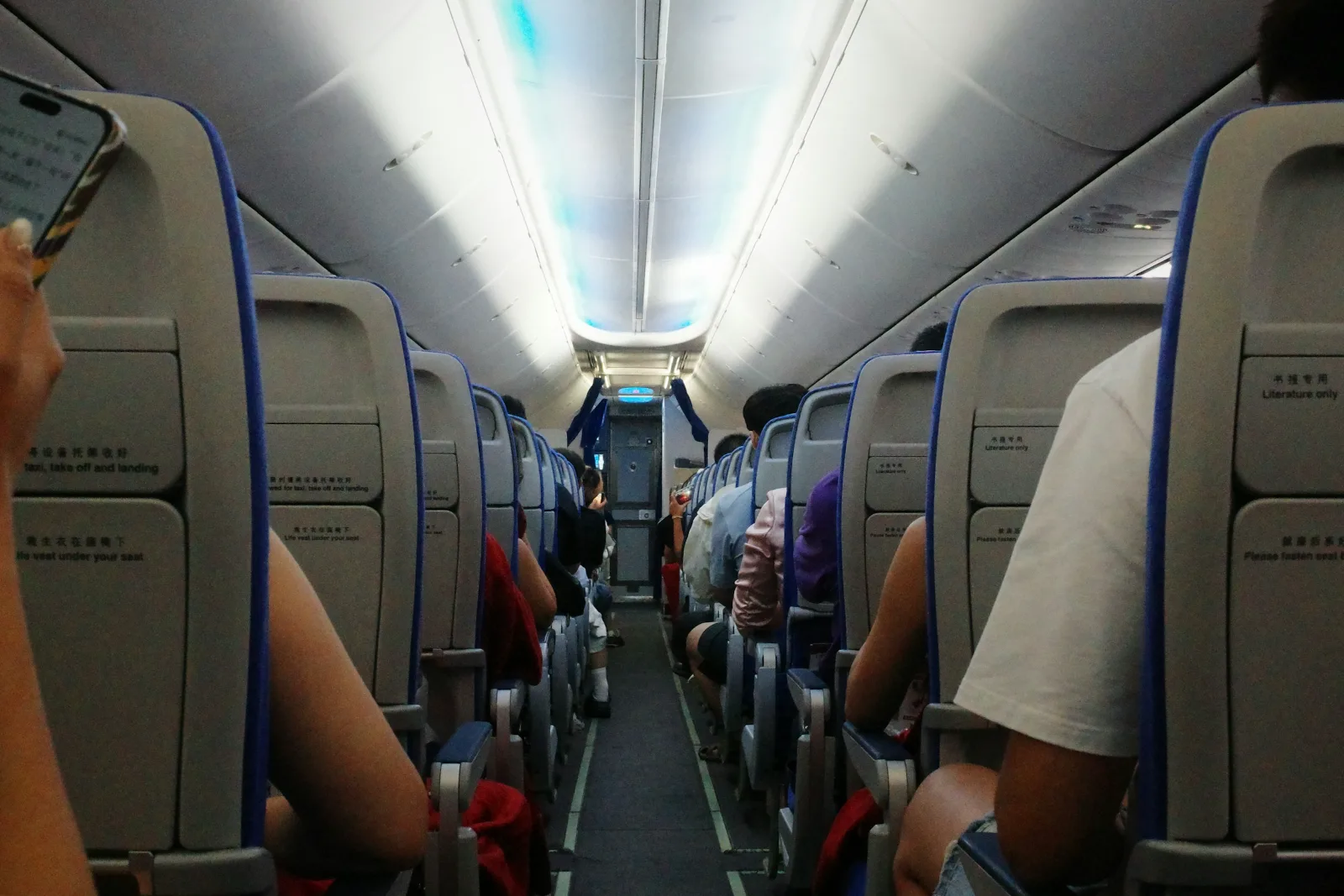
Who is at higher risk on a long flight
For most travelers the risk is small. The CDC’s travel-health chapter calls the risk of a symptomatic clot negligible on flights under four hours, and cites studies putting the risk of a clot on longer flights at 1 in 4,656 and 1 in 6,000 person-flights. Risk rises with the length of the journey and with risk factors such as a previous clot, recent surgery or injury, active cancer, pregnancy or a recent birth, estrogen-containing medicines, obesity and older age. Our page on long flights and long drives has the full list.
| Your situation | What the guidance says about stockings |
|---|---|
| No risk factors, flight under about four hours | Clot risk is negligible; socks are optional |
| No risk factors, longer flight | Not recommended for clot prevention; optional for comfort |
| Raised risk, flight over four to six hours | Properly fitted below-knee stockings giving 15–30 mmHg at the ankle, plus walking, calf exercises and an aisle seat |
| Previous clot, active cancer, recent surgery, a recent birth, or two or more risk factors at once | See your clinician before you book; some people are offered a preventive blood-thinning injection instead |
What the evidence says about compression socks on flights
The best summary is a 2021 Cochrane review of 12 randomized trials involving 2,918 passengers on flights of at least five hours. About half wore stockings, mostly below the knee at 10–20 or 20–30 mmHg, and most trials checked for clots with an ultrasound scan after the flight. Eight trials enrolled low- or medium-risk passengers; two enrolled high-risk ones.
- Symptomless clots: fewer, on high-certainty evidence. Of 2,637 passengers with results, 3 wearing stockings developed a deep vein clot without symptoms, against 47 not wearing them: a fall from a few tens per thousand passengers to two or three per thousand.
- Clots with symptoms, clots in the lungs, deaths: unknown. None occurred in any trial; answering this would take very large trials.
- Leg swelling: reduced, on low-certainty evidence.
- Superficial vein clots: possibly fewer, on moderate-certainty evidence.
- Side effects: the stockings were well tolerated where this was reported.
The honest reading
Stockings clearly reduce the clots that screening finds in people who feel fine. Whether they prevent the ones that cause symptoms or reach the lungs could not be assessed, because those are too rare for trials this size. The guidelines the CDC summarizes recommend stockings for long-distance travelers with risk factors and advise against them for travelers without.
What strength and style to choose
The guidance is specific: properly fitted, below-knee graduated stockings giving 15–30 mmHg at the ankle, worn during travel. 15–20 mmHg is the usual over-the-counter choice for a traveler with healthy arteries; 20–30 mmHg suits someone a clinician has advised to wear firmer support. If you already wear prescribed compression, travel in that. There is no standard rating scale, so “flight”, “travel” or “support” on a label means nothing on its own; compare the mmHg figure.
| Feature | Look for | Why it matters on a flight |
|---|---|---|
| Pressure | 15–20 or 20–30 mmHg, stated and graduated | The range the guidance and the trials used |
| Length and size | Below the knee, sized from the brand’s chart using morning measurements | “Properly fitted” and “below-knee” are part of the recommendation itself |
| Fabric, seams and band | Breathable cotton, merino or wicking blends; a flat toe seam; a soft top band | You may wear them door to door for half a day or more |
Fit and timing
- Buy them before the trip. Measure your ankle and calf first thing in the morning, choose from the brand’s chart, and wear them for a day at home to catch size or comfort problems.
- Put them on at home on the morning you travel, before your legs swell.
- Keep them on for the whole journey, including waits, connections and overnight flights, with the fabric smooth and the band flat.
- Take them off at bedtime after you arrive unless you were told otherwise, and sooner, with advice, if your toes tingle, go numb or change color.
Sizing and putting them on are covered in how to choose compression socks.
What else matters on the plane
- Move. Walk the aisle when you can, point, flex and circle your feet in your seat, and wear loose clothing. The CDC calls frequent walking and calf exercises reasonable for long-distance travelers.
- Take an aisle seat if you can. Window seats have been linked with about twice the clot risk of aisle seats, probably because people in them move less.
- Drink water, for the right reason. The NHS advises plenty of water and avoiding alcohol on long journeys; the CDC notes no direct evidence that either prevents travel clots, though staying hydrated is reasonable and alcohol can make you less likely to move.
- Leave aspirin and injections to your clinician. They are individual decisions, not general travel advice.
Who should ask before wearing them
- Diabetes, leg pain on walking, numb feet, a foot or leg wound, kidney disease or heart failure: have your arterial circulation checked first, usually with an ankle-brachial index, because compression is not safe when the ankle artery pressures are low. Compression safety.
- A previous clot, a clotting disorder, active cancer, recent surgery or a hospital stay, pregnancy or a recent birth: talk to your clinician before booking.
- Treatment for a clot now: the NHS advises waiting at least two weeks after starting blood thinners before a flight or long journey; check the timing with your team.
- Lymphedema, or a garment you were fitted for: travel in that garment rather than a generic sock.
Compression socks for flying: options by need
These are examples of each type, not a ranking: below-knee, graduated socks from established compression makers, each with a stated pressure inside the 15–30 mmHg range.
Soft cotton for a long day
SIGVARIS Women’s Casual Cotton Calf, 15–20 mmHg. Mostly Supima cotton, with a flat toe seam and a soft knit-in band; non-latex, in five colors and three sizes. SIGVARIS lists travelers among the people it suits, and makes a men’s version.
May suit: travelers who want an ordinary-feeling cotton sock. Limits: 15–20 mmHg only, and three sizes fit fewer leg shapes than a medical line. See it on Amazon
Merino for warm or cold cabins
SIGVARIS Men’s All-Season Merino Wool Calf, 15–20 mmHg. A merino blend that SIGVARIS describes as odor-resistant and temperature-regulating; non-latex, made in the USA, in black or navy and three sizes. A women’s version is sold separately.
May suit: long-haul travelers who run hot or cold. Limits: the same pressure ceiling and size range as the cotton version. See it on Amazon
A sock sold for travel
Truform Travel Series, model 1923, 15–20 mmHg. A unisex, latex-free knee-high in a patterned knit, with a seamless toe and a soft, non-compressive top band, in four colors, sizes small to extra-large.
May suit: travelers who want a sock that does not look medical. Limits: one pressure only, and its product page claims more about preventing DVT than the evidence above supports. See it on Amazon
Firmer support, or wide calves
JOBST ActiveWear knee-high, 20–30 mmHg, closed toe. A cushioned, athletic-style sock with moisture-wicking yarn, made in 15–20 or 20–30 mmHg, sizes small to extra-large with “full calf” versions. JOBST’s own travel page points travelers to this line.
May suit: travelers advised to wear 20–30 mmHg, and larger calves. Limits: 20–30 mmHg takes more effort to put on, and the cushioned sole adds bulk. See it on Amazon
Under business clothes
mediven for men classic, 15–20 mmHg. A ribbed dress sock with a lanolin blend and left- and right-specific feet, in standard or tall length and sizes I to VII, made in strengths from 8–15 to 30–40 mmHg.
May suit: business travelers, and tall men. Limits: men’s sizing only, and not every color comes in every strength. See it on Amazon
Downsides, and the no-purchase option
A sock only helps if it fits and stays smooth; one that is too tight, or a band that rolls, can damage skin. It does not replace getting up and moving, and for higher-risk travelers it may be only part of the plan.
If you have no risk factors, buying nothing is a reasonable choice: walk, work your ankles and take an aisle seat. Ankles that swell on every flight and settle within a day or two are common; swelling that no longer settles, or comes with aching, visible veins or skin changes, is worth having checked.
Questions to ask your clinician
- With my health and this trip, is my risk of a clot raised?
- Should I wear stockings, and if so what strength and length?
- Do I need anything else for this trip, such as a preventive injection?
- Which symptoms after I land should send me for care, and where should I go?
From the clinic
For most of my patients, a long flight calls for an aisle seat and regular walks rather than special equipment. I suggest flight socks for people with a clotting history, recent surgery, pregnancy, or legs that swell on every trip, and I want them fitted, below the knee and on before boarding. Anyone with a recent clot or several risk factors should talk to their own doctor before the trip rather than relying on socks alone.
Common questions
Should I wear compression socks on a plane?
If the flight is longer than about four to six hours and you have a risk factor for clots, yes: properly fitted below-knee stockings of 15–30 mmHg, plus walking and calf exercises. Without risk factors they are optional, not a clot-prevention measure. With diabetes, numb feet or artery disease, have your arteries checked first.
Do compression socks prevent blood clots on flights?
They reduce clots that cause no symptoms. A 2021 Cochrane review of 12 trials found high-certainty evidence of a fall from a few tens per thousand passengers to two or three per thousand. No trial recorded a clot with symptoms, a clot in the lungs or a death, so the effect on those is unknown, and socks do not replace getting up and moving.
What mmHg should compression socks for flying be?
Between 15 and 30 mmHg at the ankle, below the knee and properly fitted: usually 15–20 mmHg for a traveler with healthy arteries, and 20–30 mmHg when a clinician advises firmer support. If you already wear prescribed compression, travel in that.
When should I put compression socks on for a flight, and when can I take them off?
Put them on at home the morning you travel and keep them on for the whole journey, including waits, connections and overnight flights. Take them off at bedtime after you arrive unless you were told otherwise, and straight away if your toes tingle, go numb or change color.
Are flight socks the same as compression socks?
Usually: “flight socks” is a common name for compression stockings worn for travel, and the Cochrane review uses it that way. But the name guarantees nothing. Look for a stated pressure in mmHg at the ankle, the word “graduated” and a real size chart.
Where to go next
Sources
- Centers for Disease Control and Prevention. CDC Yellow Book 2026: Deep Vein Thrombosis and Pulmonary Embolism.
- Centers for Disease Control and Prevention. Understanding Your Risk for Blood Clots with Travel.
- Cochrane. Compression stockings for preventing deep vein thrombosis (DVT) in airline passengers (plain language summary, 2021).
- Cochrane Library. Compression stockings for preventing deep vein thrombosis in airline passengers (full review, 2021 update).
- NHS. DVT (deep vein thrombosis).
- NHS. Venous leg ulcer – diagnosis.
- Cleveland Clinic. Compression Therapy: Types and Benefits.
- MedlinePlus. Compression stockings.
- Mayo Clinic News Network. Mayo Clinic Q and A: Tips for using compression stockings.
- University Hospitals Birmingham NHS Foundation Trust. Compression Stockings and Wraps: Patient Information Leaflet.
Written by Tom Biernacki, DPM, FACFAS. Published 9 October 2026. Updated 16 October 2026. Research-based comparison; product details and retailer links checked 9 October 2026. General education, not medical advice.