Chilblains are small, itchy or burning, red to purple swellings that appear on the toes or fingers a few hours after time in damp cold, when the small blood vessels in the skin react badly to cooling and rewarming. Most clear up on their own in two to three weeks, especially if you keep the skin warm, dry and unscratched. A few situations, set out below, need a doctor.
When it is more than chilblains
Call 911 if a foot or leg suddenly becomes cold, pale or mottled, numb, weak or severely painful over minutes to hours. Chilblains do not behave like that; it can mean the blood supply has been cut off, and time is critical.
Call 911 or go to an emergency department if, after time in freezing temperatures, skin is hard and frozen, swollen and numb, or blistering. That can be frostbite.
Be seen today for signs of infection, such as spreading redness, warmth or pus, and for a chilblain that breaks open if you have diabetes or poor circulation. Call 911 for a wound with spreading redness plus fever, chills, confusion, a rapidly worsening appearance or a foul smell.
Be seen the same day or the next for a dark, black or leathery patch of skin, or for a sore that has not closed or is getting bigger. Care thresholds →
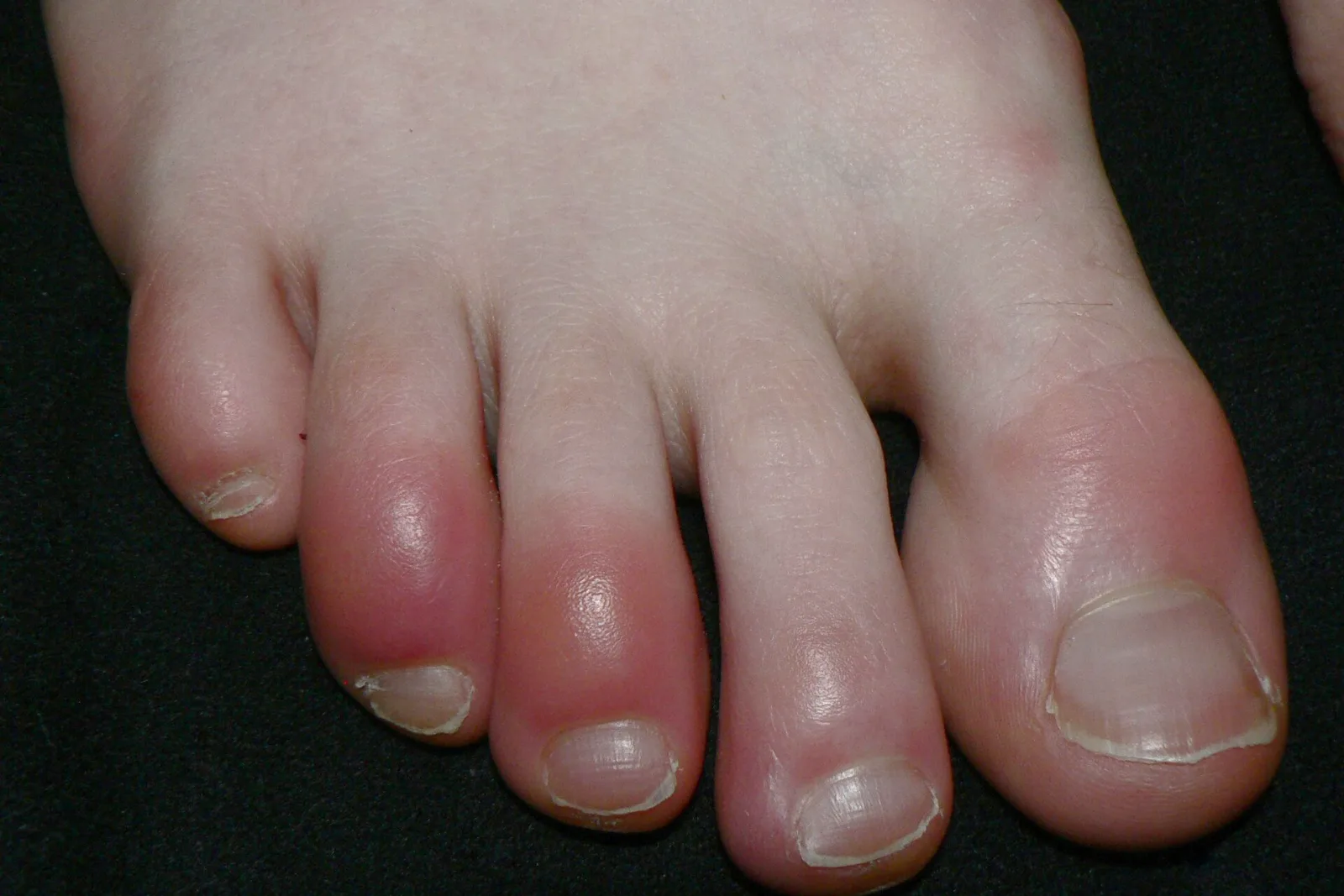
What chilblains look like
Chilblains are small, swollen patches that itch or burn, most often on the toes and fingers. They appear a few hours after you have been in the cold, and each one lasts more than a day. That helps tell them apart from a Raynaud’s attack, which is over within minutes to hours.
- Color: red or purple. On brown and black skin the redness can be harder to see, the NHS notes.
- Feel: itching, burning, stinging or pain, often worse as the skin warms up.
- Shape: small raised bumps or swollen areas; several can merge into one larger swollen patch.
- In more severe cases: blisters, and sometimes open sores or ulcers.
- Where: mostly toes and fingers, sometimes the ears, nose, face or legs.
The medical names are pernio and perniosis. Chilblains are not frostbite, which is an injury from skin and tissue actually freezing.
What causes chilblains
Cold makes the small blood vessels in your toes and fingers narrow. As the skin warms again, the NHS explains, the vessels deeper in the skin stay narrow while those near the surface widen, and that mismatch causes the pain, itching and color change. Dermatologists describe the result as a localized inflammation of small blood vessels.
The usual trigger is damp cold that is above freezing. DermNet notes that chilblains are seen in temperate climates rather than places with extreme cold, and that late winter and early spring, wet but above freezing, are their peak season.
Fast rewarming seems to play a part, because small blood vessels cope badly with quick temperature changes, which is why warming cold feet on a radiator or in hot water is discouraged. Even so, the exact cause is unknown.
Who gets chilblains
Most chilblains happen in otherwise healthy people. They are more likely if you:
- are a woman, especially between the ages of 15 and 30
- are underweight or poorly nourished
- smoke
- wear tight shoes or clothing, or leave skin exposed, in cold, damp weather
- work outdoors, as farmers and fishermen do, or live somewhere cold and humid
- have Raynaud’s, poor circulation, or a connective tissue disease such as lupus
- have relatives who get them
New chilblains are unusual in older adults, and DermNet advises looking for an underlying cause when they first appear later in life.
How long do chilblains last?
Usually two to three weeks, sometimes only one, and they tend to clear faster as the weather warms. They settle best when the skin is kept warm and dry and is not chilled again while it heals.
They can come back with each cold spell or every winter, and in some people they become long-running. Repeated, long-lasting chilblains can leave scarring and thin skin.
Most chilblains heal without lasting damage. The complications to watch for are blisters that break down into open sores, and cracked skin that becomes infected. Both matter most if you have diabetes or poor circulation: reduced blood flow makes sores and infections slow to heal, and nerve damage can mean a problem does not hurt.
Chilblains treatment at home
There is no quick fix. The aim is to let the skin settle without making it worse:
- Warm up slowly. Come indoors, dry your skin, and let your feet warm gradually at room temperature in dry socks.
- No direct heat. Keep your feet away from radiators, fires, heaters, heating pads and hot water bottles, and do not put them in hot water.
- Do not rub, scratch or pick. Rewarm without massaging, and leave the patches alone, however much they itch.
- Soothe the itch. A pharmacist can suggest a lotion. Mayo Clinic mentions hydrocortisone cream for itching, and an NHS podiatry leaflet suggests calamine lotion or witch hazel; a plain moisturizer keeps the surrounding skin supple.
- Protect broken skin. If a chilblain blisters or opens, keep it clean and covered with a dry, sterile dressing, and watch for signs of infection.
- Keep your feet warm and dry from here on. Change damp socks, and avoid more cold while they heal.
- Cut back on things that affect blood flow in the fingers and toes: smoking, caffeine, and decongestant medicines for a blocked nose, the NHS advises.
If you also have Raynaud’s
Mayo Clinic’s steps for a Raynaud’s attack include massaging the hands and feet, while its chilblains advice is to rewarm slowly without massaging, rubbing or direct heat. The sources do not say which to follow when you have both, so avoid rubbing the itchy patches themselves and ask your doctor.
What a doctor may prescribe
For chilblains that are severe, slow to settle or keep coming back, a doctor may suggest:
- A steroid cream, to calm itching and help sores clear.
- Nifedipine, a calcium channel blocker that widens blood vessels, when other measures have not worked. DermNet reports that it can speed healing and reduce relapses.
- Other options DermNet lists include nitroglycerin applied to the skin, and pentoxifylline.
If the cause is unclear or they keep returning, blood tests or a small skin biopsy can look for an underlying condition such as lupus.
Preventing chilblains
- Keep the whole body warm, not just your feet: loose layers, a hat, a scarf, and gloves or mittens.
- Socks and shoes: thick socks, or two thin pairs, in warm, water-resistant shoes or boots with room for them. Tight shoes in cold, damp weather make chilblains more likely.
- Stay dry. Damp cold is the usual trigger, so change socks that get wet.
- Warm up gradually when you come in from the cold, and keep your home and workplace comfortably warm.
- Keep moving. Vigorous exercise keeps you warm and helps circulation.
- Do not smoke. Smoking narrows blood vessels and slows healing. Building a quit plan →
Heated socks and insoles press a heat source against the skin, so read heated socks and insoles before relying on them, especially with diabetes, numbness or artery disease. Do not use them over active chilblains, because Mayo Clinic advises rewarming without direct heat. Socks for swollen feet covers warm, non-binding socks.

When to see a doctor
Most chilblains never need one. For chilblains on the feet, a family doctor or a podiatrist can assess them. Make an appointment if:
- they are not getting better after two to three weeks
- you keep getting them, every winter or with each cold spell
- they last into the warm months, or appear without any cold exposure
- you have diabetes or poor circulation, where foot problems can be more serious and slower to heal
- they are your first chilblains and you are older
- they come with joint pain, rashes, mouth sores, fevers or frequent tiredness, which can point toward lupus
- a sore has opened and is not healing (see a wound that will not heal)
- you are not sure whether you were in below-freezing temperatures, since it could be frostbite
With diabetes, numbness or artery disease, do not wait out a chilblain that has broken the skin: that needs to be seen today. A daily look at your feet catches these early; see the two-minute foot check.
Chilblains vs Raynaud’s, frostbite and PAD
Four problems can leave toes red, blue or purple around cold weather. Timing is the most useful clue.
| Condition | Timing | What you notice | What it needs |
|---|---|---|---|
| Chilblains | Appear a few hours after damp cold above freezing; last one to three weeks | Itchy or burning red-purple swellings, sometimes blisters | Gentle warmth and time; a doctor if slow to heal, infected or recurring |
| Raynaud’s | Comes on with cold or stress; each attack lasts minutes to hours | White, blue, then red; numbness, then throbbing | Warmth and trigger control; a check-up if it starts after 30, is one-sided or causes sores |
| Frostbite | During exposure at 0°C (32°F) or below; damage shows over hours to weeks | Cold, hard, waxy skin, white or blue-gray; blisters after rewarming; can later turn black | Medical care; emergency care for hard frozen skin, blisters or loss of feeling |
| Peripheral artery disease (PAD) | Not tied to a cold snap; builds gradually over time | One foot colder than the other; pale, bluish or shiny skin; little hair on the feet; leg pain on walking; slow-healing sores | An arterial check; the same day or the next for pain at rest, sores or dark patches |
Other color changes in the feet have their own causes: red, blue, pale or purple feet covers them, cold feet covers the temperature side, and PAD symptoms the artery side.
COVID toes and chilblain lupus
COVID toes
During the COVID-19 pandemic, dermatologists reported many cases of chilblain-like changes on the toes, nicknamed “COVID toes”. The American Academy of Dermatology (AAD) describes one or more swollen toes turning pink, red or purplish, sometimes with round reddish-brown or purple spots; on darker skin the change is often purplish. The toes may itch or hurt, and blisters can form.
Children, teenagers and young adults seemed most likely to get them, often with mild or no COVID symptoms, possibly one to four weeks after infection. The link is not settled. Mayo Clinic lists SARS-CoV-2 among the conditions that raise the risk of chilblains, but the AAD says researchers are still looking at whether COVID-19 causes the changes, and DermNet notes that virus tests in these patients were mostly negative and many had no recent cold exposure.
COVID toes usually go away on their own. The AAD advises keeping your whole body warm, and a doctor may suggest a steroid cream for pain or itching. See a doctor if they are not better in two to three weeks, if the discoloration darkens or spreads, or if you develop numbness, blisters, sores, fever or pus.
Chilblain lupus
Chilblain lupus erythematosus is a rare form of skin lupus that looks like chilblains: red or dusky purple patches on the fingers, toes, heels or soles, brought on or made worse by cold and damp. According to DermNet, patches that persist beyond the colder months and a positive antinuclear antibody (ANA) test help set it apart from ordinary chilblains, and some people with it have, or later develop, systemic lupus.
A skin biopsy and blood tests help settle the question, which is one reason chilblains that last into summer deserve a doctor’s look.
Common questions
How long do chilblains last?
Usually two to three weeks, and sometimes only one. They clear faster when the skin is kept warm and dry and the weather warms up. If they are not improving after two to three weeks, see a doctor.
What is the fastest way to get rid of chilblains?
There is no quick fix. Gentle, gradual warmth, dry socks, no scratching and no fresh cold exposure give them the best chance to settle, and a pharmacist can suggest a lotion for the itch. For stubborn or recurring chilblains, a doctor can prescribe a steroid cream or nifedipine.
What causes chilblains on toes?
An abnormal reaction of the small blood vessels in the skin to damp cold followed by rewarming. Toes are among the most common sites, and tight shoes, damp socks, smoking and being underweight all add to the risk.
Are chilblains a sign of poor circulation?
Not usually. Most chilblains happen in otherwise healthy people, although poor circulation, Raynaud’s and lupus all make them more likely. Chilblains that keep coming back, start later in life, last into warm weather or will not heal are worth a check.
Should I put my feet in hot water if I have chilblains?
No. The NHS advises against warming cold feet in hot water or on a radiator, and Mayo Clinic advises rewarming slowly without direct heat. Warm up gradually at room temperature in dry socks. With numbness or diabetes, hot water also risks a burn you may not feel.
Are chilblains the same as frostbite?
No. Frostbite is skin and tissue freezing at or below 0°C (32°F): the skin goes hard, waxy and numb, may blister after rewarming, and needs medical care. Chilblains follow damp cold above freezing and cause itchy or burning swellings that usually heal on their own.
Where to go next
- Raynaud’s syndrome: why fingers and toes turn white, then blue
- Cold feet: causes and when to get checked
- Red, blue, pale or purple feet
- Daily foot and leg skin checks
- A foot or leg wound that will not heal
- Heated socks and insoles: who should ask first
- Near Howell or Bloomfield Township, Michigan: a foot and ankle evaluation (the author’s own practice)
Sources
- NHS. Chilblains, Frostbite and Raynaud’s.
- Mayo Clinic. Chilblains — Symptoms and causes and Diagnosis and treatment; Raynaud’s disease — Symptoms and causes and Diagnosis and treatment; Frostbite — Symptoms and causes.
- DermNet. Chilblains and Chilblain lupus erythematosus.
- American Academy of Dermatology. COVID toes and other rashes COVID-19 may cause.
- The Dudley Group NHS Foundation Trust. Chilblains (podiatry patient information leaflet).
- National Institute of Arthritis and Musculoskeletal and Skin Diseases. Lupus.
- National Institute of Diabetes and Digestive and Kidney Diseases. Diabetes and Foot Problems.
- Society for Vascular Surgery. Acute Limb Ischemia and Peripheral Artery Disease.
Written by Tom Biernacki, DPM, FACFAS. Published 18 October 2026. General education, not medical advice.